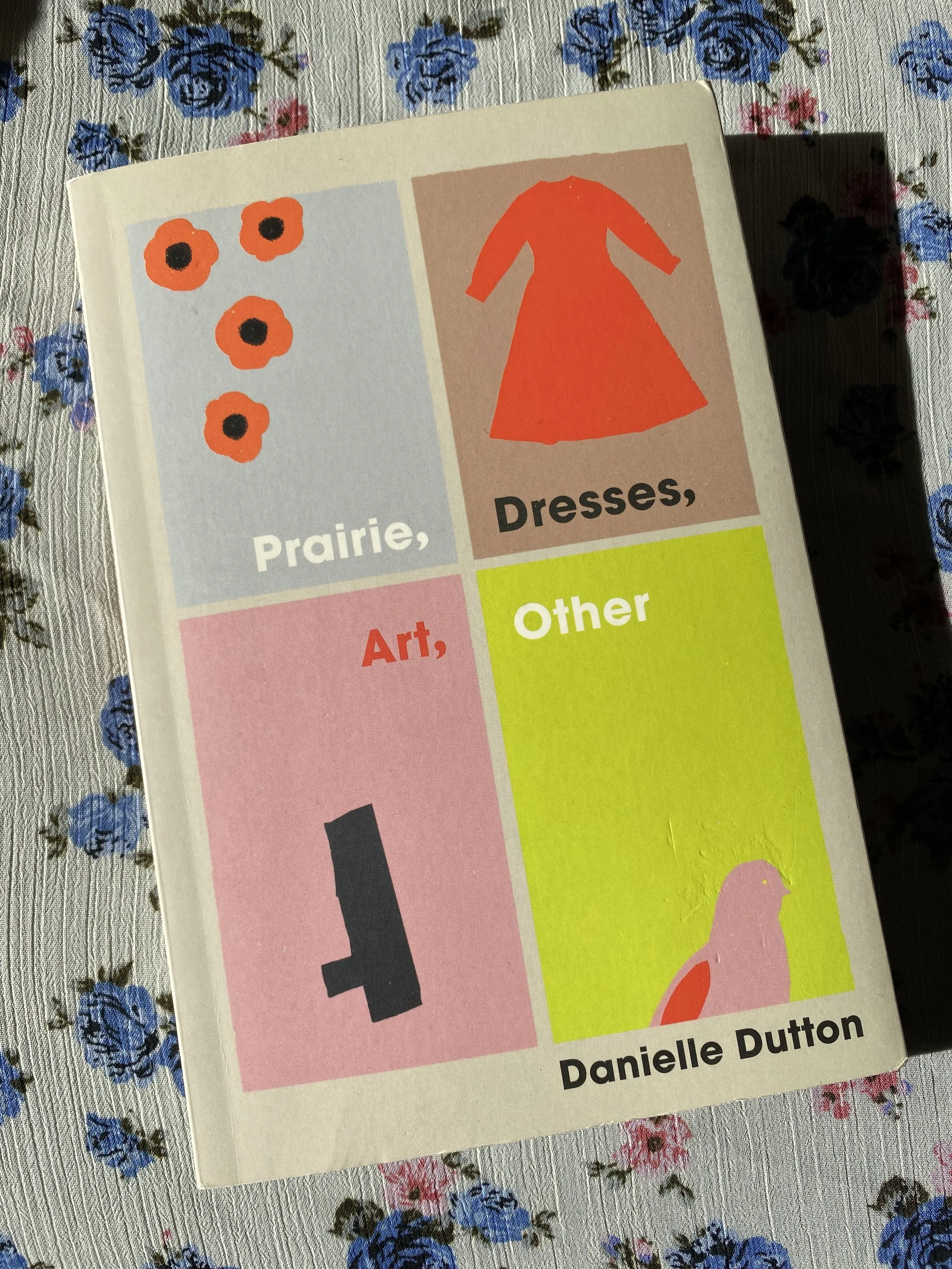
Prairie, Dresses, Art, Other by Danielle Dutton

4/5 stars

What's it about? Danielle Dutton writes to the four title subjects, forging a collection of plain good storytelling. A book that takes risks, and they work.

How’d I find it? The person who recommended Best Barbarian by Roger Reeves suggested this one, so I had an inkling I’d like it.

Who will enjoy this book? Readers of Anne Carson and Maggie Nelson’s Bluets will love this book.

What stood out? I was particularly smitten with the collage pieces of Prairie, Dresses, Art, Other: “Sixty-Six Dresses I Have Read,” a quilt of writing about dresses that builds into a larger narrative, and “A Picture Held Us Captive,” a smart essay on how artworks converse with each other. The eclectic mix of work featured here includes flash fiction, essay, memoir, and even a one-act play.

Which line made me feel something? From the short story “Installation:” “The ‘hillside’ evoked hillsides, she realized, but other things as well. It felt like a performance. It felt like an obsession in space.”

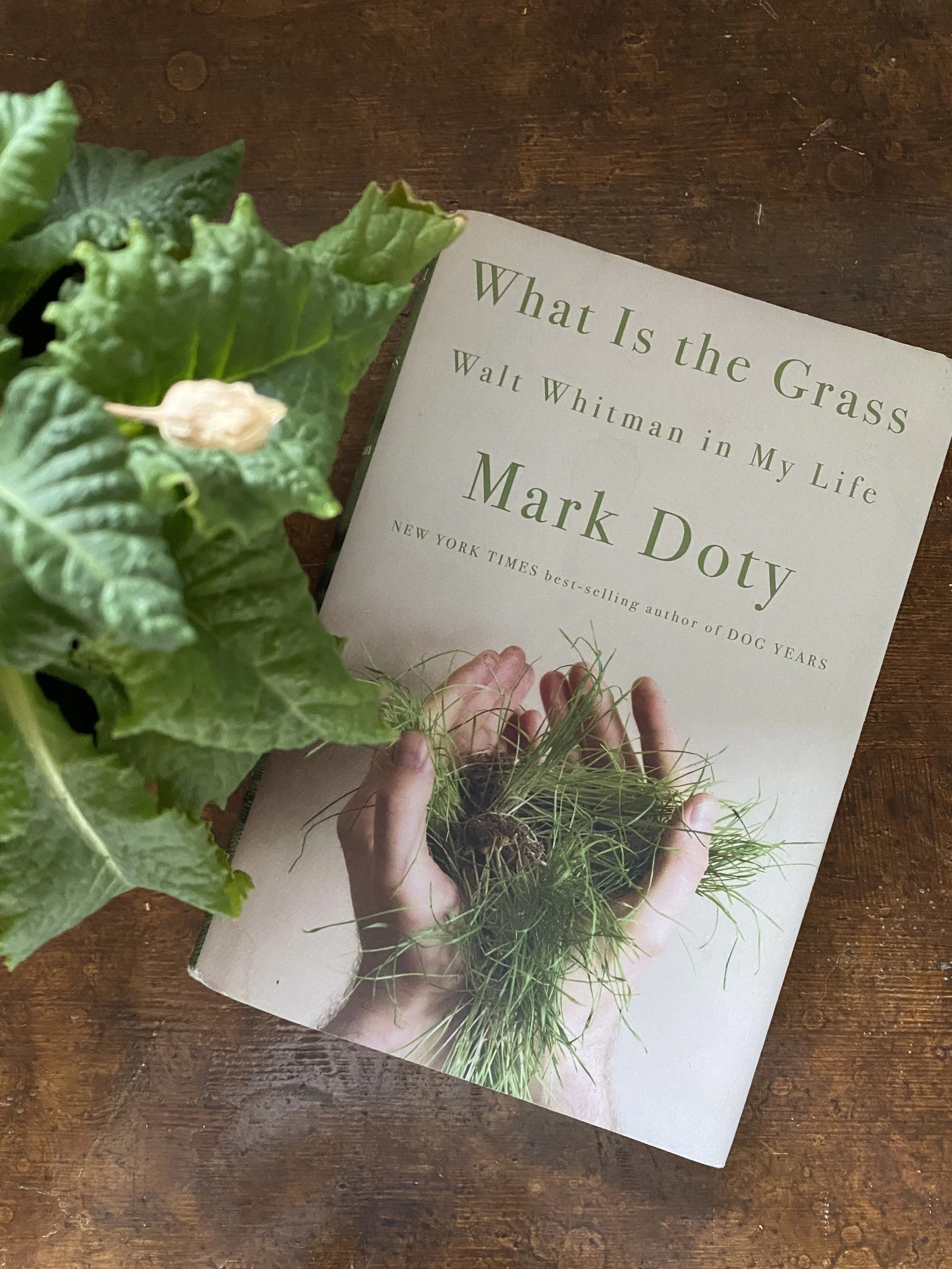
What Is The Grass by Mark Doty

5/5 stars

What's it about? In essays both personal and intellectual, poet Mark Doty celebrates the impact of Walt Whitman — his spirit and his work — on the development of his own craft and identity. A rich, endearing read.

How’d I find it? Whitman seems to find me.

Who will enjoy this book? Fellow Whitmanians will gobble up this one. Those interested in contemporary poetics should find much to appreciate.

What stood out? It isn’t quite right to think of What Is the Grass as criticism. It’s more inspiration in action. Doty discusses echoes of Whitman in his life through a fusion of memoir, analysis, and praise, extolling the America imagined by Whitman in Leaves of Grass, a groundbreaking force. Swaths of Whitman’s work anchor each essay, inviting readers to revisit the source material. What Is the Grass argues for poetry’s possibilities.

Which line made me feel something? “What does being on earth ask of us? The world wants to be rescued from evanescence, to be translated into an immaterial realm that does not perish because it was never exactly alive. To become, in other words, poetry”. Shivers.

Bright Unbearable Reality by Anna Badkhen

3/5 stars

What's it about? Badkhen reflects on humanity, origins, and the inequities of our world in this collection that is part travelogue, part reckoning. Bright Unbearable Reality figures into the chorus of responses to the pandemic and its aftermath.

How’d I find it? One always finds something on the sale tables at Powell’s.

Who will enjoy this book? If Zadie Smith’s Intimations resonated with you, Badkhen’s thoughts might, too.

What stood out? Badkhen takes a graceful approach to mass migration, displacement, and injustice, and, while her sumptuous language doesn’t always work, it’s intoxicating to read. She pulls from across the spectrum of human creativity to enrich her subjects, like, for example, when she references the sculptures of Roni Horn in an essay set during a pilgrimage across the Sahara.

Which line made me feel something? From “Dark Matter:” “Why refuse to address head-on the two experiences that pinnacle our humanness, violence and astonishment, why find circuitous ways to describe them; why not behold and marvel at what is before us on its own terms, just as it is; what avarice within us makes us plow right through the miraculous, or past it, without pause, makes us insatiable?”

Shit, Actually by Lindy West

3/5 stars

What's it about? Lindy West compiles her reviews of cinematic favorites both beloved and awesomely bad, scored in copies of DVDs of The Fugitive. Spot-on, irreverent, and hilariously petty.

How’d I find it? I loved Shrill and had to read West’s movie takedowns.

Who will enjoy this book? Fans of the podcast How Did This Get Made?

What stood out? I reread the reviews of Love Actually, Harry Potter and the Sorcerer’s Stone, and Twilight several times to enjoy the laugh out loud moments. While West is talented and sharp as always, the quips about our current social/economic/political climate didn’t work for me in this book. Sometimes, I just want to read about movies.

Which line made me feel something? From “Never Boring, Always Horny:” "Of all the weird shit Stephanie Meyer wrote in this series, ‘all vampires love baseball’ is absolutely the weirdest. Did you know a vampire can smell a drop of baseball in a million gallons of old growth forest?"

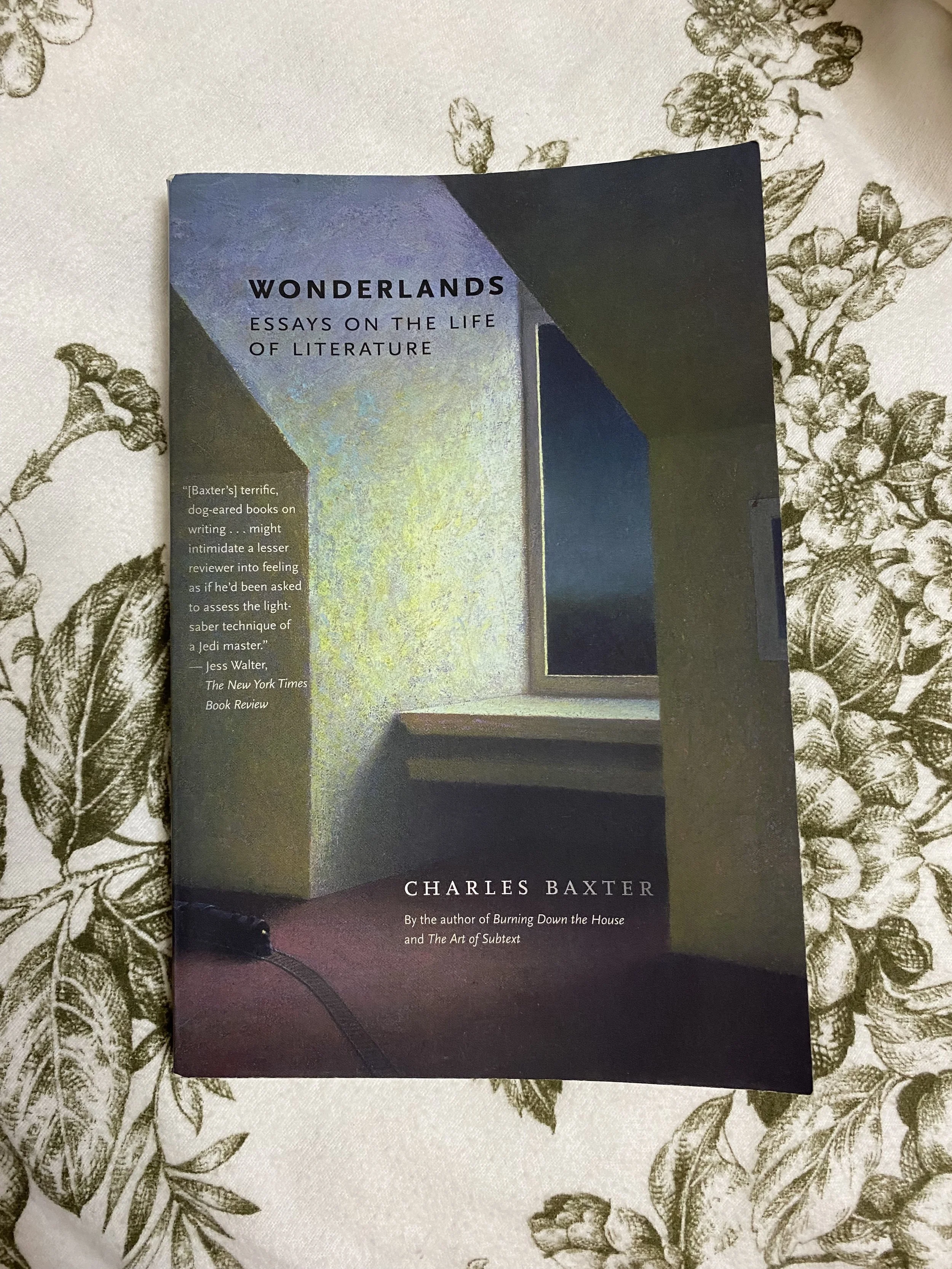
Wonderlands: Essays on the Life of Literature by Charles Baxter

2/5 stars

How’d I find it? I recently read The Feast of Love and Gryphon and was excited to explore more of Baxter’s work when I found this at Politics & Prose.

Why not 3 or more stars? Writing about writing is one of my favorite genres, as it offers insight into the author’s approach to craft and, often, their own reading taste. I love coming away with a list of new things to read or the urge to revisit a short story with a different perspective. Wonderlands felt entry-level, its arguments too obvious to be robust. Like reality in the dream worlds Baxter describes, my mind tended to drift with every page.

Why Not Me? by Mindy Kaling

3/5 stars

What's it about? Kaling's second collection of essays muses on fame, work, and love. A light-hearted, delightful read.

How’d I find it? I’m a millennial who has seen every episode of The Office more times than she can count.

Who will enjoy this book? The bottom line: if you like Mindy and celebrity memoirs, you'll enjoy this book. Looking for a read-alike? Try You Can't Touch My Hair by Phoebe Robinson.

What stood out? Kaling's essay on weddings (and why being a bridesmaid stinks) is a hilarious and touching reflection on female friendship. "A Perfect Courtship in My Alternate Life" imagines Kaling's life if she'd ended up as a Latin teacher at a Manhattan private school, told via email exchanges.

Which line made me feel something? A loud cackle escaped from me at the following description of a certain sorority: "Their finely toned arms replace a finely honed sense of irony."

In Deep by Maxine Kumin

4/5 stars

What's it about? Poet Maxine Kumin talks craft and country living in this volume of essays about managing a farm in New Hampshire while maintaining a writing life. A warm hearth of a book.

How’d I find it? I picked this up at Normals Books & Records in Baltimore, which has the kind of selection that makes me say, “Ooh!” and pluck a book off the shelf that I never even knew existed.

Who will enjoy this book? In Deep is for horse girls young and old, as well as for Mary Oliver and Henry David Thoreau acolytes.

What stood out? In Deep owes much to Kumin’s admiration of Thoreau, whose influence can be seen in essays dedicated to taxonomic descriptions of mushrooms and species of cattle as well as in “The Unhandselled Globe,” which centers on Thoreau himself. Kumin rejects the Freudian links to women who love horses and gendered assumptions about her mares; she and the animals she loves are the focus here, and glimpses of her human family are brief. She writes beautifully about the day-to-day labors of keeping a farm running, from building fences to keeping everyone fed.

Which line made me feel something? From the closing essay, “A Sense of Place,” an outstanding analysis of the stamp of home on Kumin’s poetry: “In a poem one can use the sense of place as an anchor for larger concerns, as a link between narrow details and global realities. Location is where we start from. Landscape provides our first geography, the turn of the seasons are archetypes for our own mortality.”

A Line in the World by Dorthe Nors, translated by Caroline Waight

3/5 stars

What's it about? Dorthe Nors explores the forces and landscape of Denmark’s northernmost coast in this contemplative collection of essays.

How’d I find it? I learned about this book through a review in Harper’s then found a copy at Normals Books & Records, which has notably good nature writing on offer.

Who will enjoy this book? Fans of Roger Deakin’s Waterlog and Mary Oliver’s Upstream should try this one.

What stood out? A Line in the World captures the Jutland Peninsula and the surrounding islands in all their diversity, cultural quirks, and violent expressions of nature. You can almost feel the windslap on your cheeks in every paragraph. The book is beautifully illustrated by Signe Parkins, who appears in the essay “The Timeless.”

Which line made me feel something? From “The Tracks around Bulbjerg:” “The eternal, fertile and dread-laden stream inside us. This fundamental question: do you want to remember or forget? Either way, something will grow. A path, a scar in the mind, a sorrow that you cannot grasp, because it belongs to someone else. All that must be carried alone. All that cannot be told.”

Congratulations, the Best Is Over by R. Eric Thomas

3/5 stars

What's it about? In this charming essay collection, R. Eric Thomas returns to his native Baltimore, where he works through mental health challenges, buys his first home with his husband, weathers the pandemic, and navigates grief — heavy subjects sweetened by the author’s humor and vulnerability.

How’d I find it? I received this as a Christmas gift, but you should buy a copy from a Baltimore bookstore.

Who will enjoy this book? Fans of David Sedaris and Phoebe Robinson might appreciate.

What stood out? As a recent resident of Baltimore, I delighted in Thomas’s rediscovery of his hometown. Thomas knows how to balance self-deprecating jokes with serious discussions of American life, which makes his work approachable. A standout essay is “Clap Until You Feel It,” a journey through depression to chase the feeling of an Oprah’s Favorite Things episode. Because many of the essays feel unfinished or abrupt in their transitions, I wonder how this book would have read if fleshed out as a memoir.

Which line made me feel something? “Am I my ancestors’ wildest dream? Babe, I don’t know. I’ll settle for being my ancestors’ weirdest dream. I’m the dream my ancestors had when they got indigestion.”

They Can't Kill Us Until They Kill Us by Hanif Abdurraqib

4/5 stars

What's it about? In this collection of essays, Hanif Abdurraqib examines how music and performance influence and are influenced by culture, race, and coming-of-age experiences, an opportunity for reflections on the author’s own upbringing in Columbus, Ohio. Probing, eloquent, and personally generous.

How’d I find it? Ever since I read this poem by Abdurraqib, I’ve been collecting everything he puts out. This copy was purchased at Solid State Books.

Who will enjoy this book? Fans of Jia Tolentino’s Trick Mirror, Hilton Als’ White Girls, and Roxane Gay’s writing should like They Can’t Kill Us Until They Kill Us.

What stood out? Abdurraqib hinges his social meditations on a variety of artists —Chance the Rapper, Carly Rae Jepsen, and Fall Out Boy, to name a few —that allows him to scan an impressive breadth of subject matter, and he meets the challenge handsomely in beautifully crafted and passionate pieces. Abdurraqib’s mastery as a poet can be both a blessing and a curse in a dense book of short essays like this; his stylistic flourishes get sometimes tired during a longer reading session.

Which line made me feel something? “If you believe that it rained in Ohio on the night Allen Iverson hit Michael Jordan with a mean crossover, you will also believe that I know this by the sound that lingered in the air after my small cheering, the way rain can sometimes sound like an echo of applause if it hits a roof hard enough. You will also believe that I know this by the way an unexpected puddle can slow down a basketball’s dribble on blacktop, especially if the basketball is losing some of its traction, some of the grip that it had in its younger days.”