4/5 stars
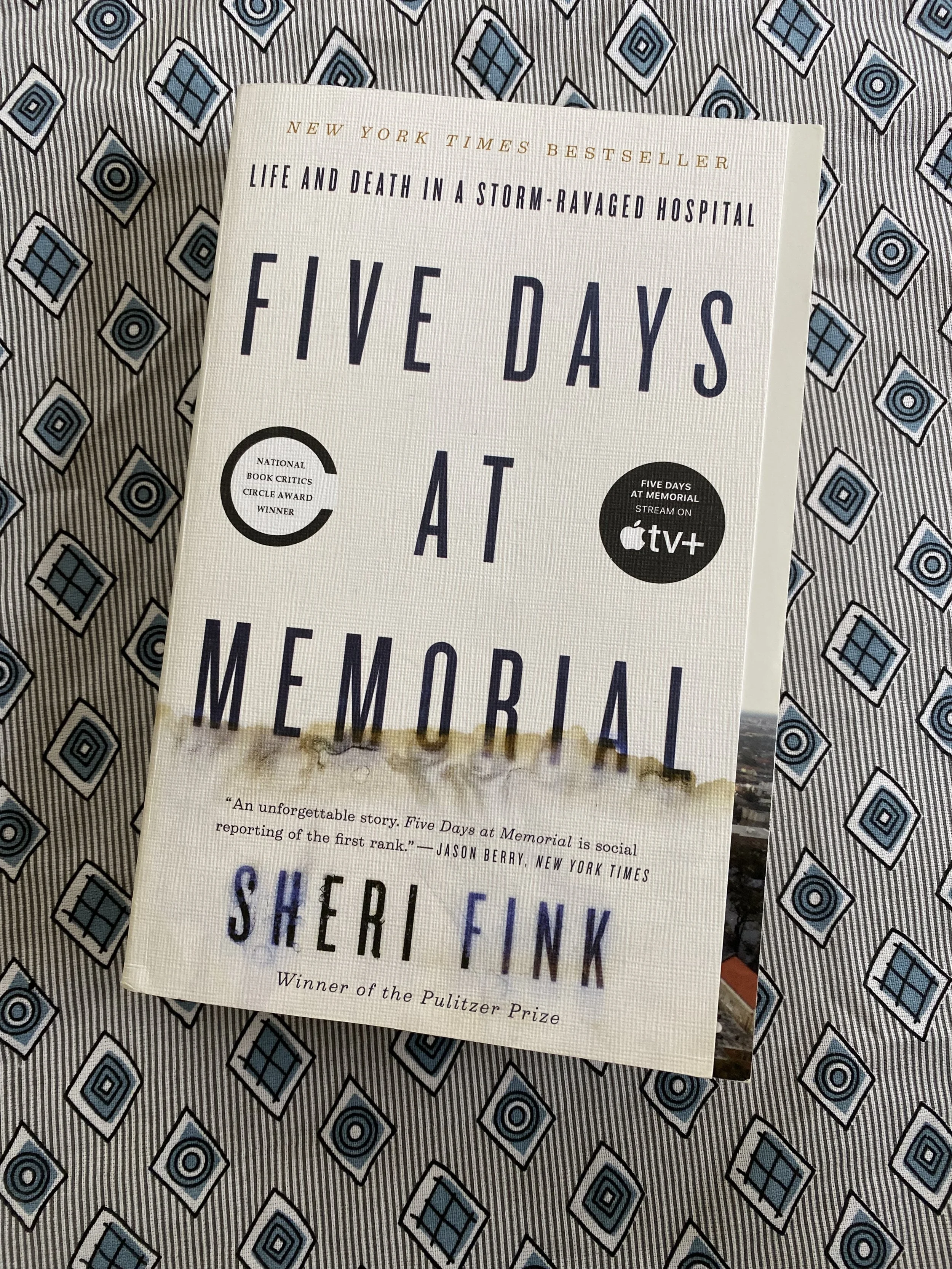
What's it about? In a thorough and fascinating investigation, Sheri Fink details the individual and systemic failures that led to the unnecessary deaths of patients stranded by Hurricane Katrina at Memorial Medical Center in New Orleans. Fink delivers an unsettling account of ethical questions in healthcare and injustices magnified by our poor preparedness for disasters.
How’d I find it? My book club at work is reading this for its summer pick. I enjoyed much of Five Days at Memorial in its audio format, which was like listening to one long episode of Serial. As a nurse, this book has been hard to shake off.
Who will enjoy this book? The true crime elements recall David Cullen’s Columbine. Try The Yellow House by Sarah M. Broom for a companion read to provide additional context about New Orleans during Katrina.
What stood out? The depth of Fink’s research is evident in the gripping narrative driving Five Days at Memorial, a page-turner the likes of The Executioner’s Song. We get to know the real people behind the devastating decisions they made for Memorial’s patients, and that perspective provides nuance to their actions. Fink takes on the underlying factors that led to the crimes at Memorial, including a history of discrimination, the politics that allowed for unsafe conditions in a hurricane-prone region, and the deficiencies of our healthcare system.
Which line made me feel something? Though written in 2013, Five Days at Memorial raises issues that would haunt the COVID-19 pandemic years later: “The goal, participants said, was to save as many lives as possible while adhering to an ethical framework. This represented a departure from the usual medical standard of care, which focuses on doing everything possible to save each individual life. Setting out guidelines in advance of a crisis was a way to avoid putting exhausted, stressed frontline health professionals in the position of having to come up with criteria for making tough decisions in the midst of a crisis”.