Open Throat by Henry Hoke

4/5 stars

What's it about? A mountain lion contemplates identity, desire, and connection as they struggle to survive in the Hollywood Hills. Scarcity (interpreted by the lion as “scare city” from snippets of conversation between hikers) and curiosity drive the lion into human interactions with strange and violent consequences. A smart and mighty novel.

How’d I find it? A bookseller at Solid State Books uttered the words “queer mountain lion,” and I was sold.

Who will enjoy this book? Lovers of writing about Los Angeles (“ellay” in the novel), queer themes, and short experimental reads (think Fernanda Melchor or Olga Ravn’s The Employees) should appreciate, though the uniqueness of this book makes exact read-alikes difficult to pinpoint.

What stood out? This is anthropomorphism done right. Hoke doesn’t attempt to explain the lion’s psyche; even their name is “not made of noises a person can make”. The text is appropriately bereft of punctuation and capitalization, and people’s conversations are rendered in the lion’s own understanding, offering chuckles and fresh perspective. You’ll read this slim novel in one sitting, as it’s impossible to put down once you tuck in.

Which line made me feel something? Some of the best lines appear in the lion’s experience of fire: “my lungs are full of ugly” and “fire is the only future”. Look out for other beautiful snippets in the lion’s telling of their life before Hollywood.
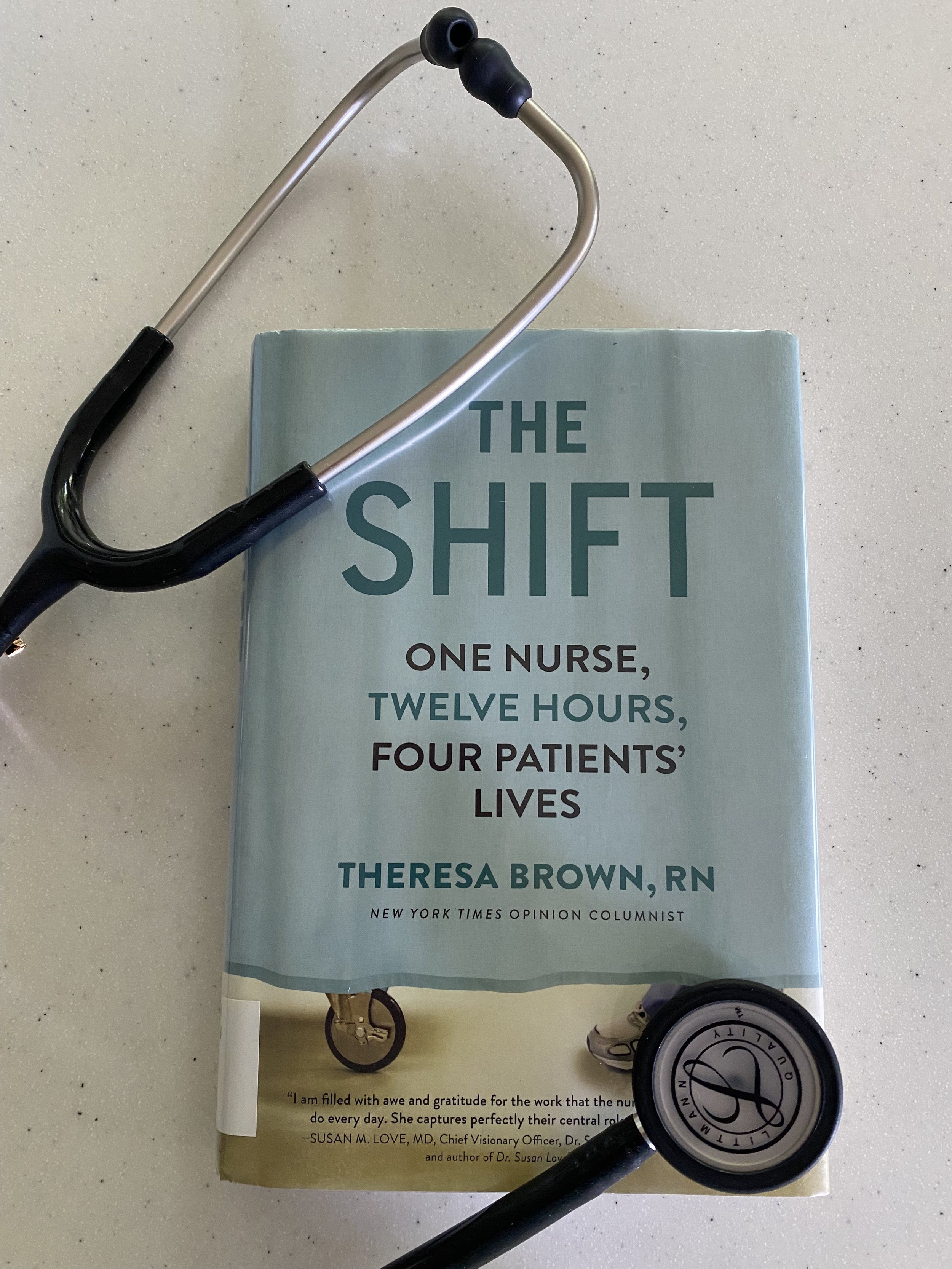
The Shift by Theresa Brown

3/5 stars

What's it about? Theresa Brown gives an inside look into the daily work of an oncology nurse. We follow her through the twelve hours of a shift as she juggles four patient’s needs on a busy hospital floor. Brown captures well the hectic pace of a nursing shift and the struggle to continuously advocate for patients in a complex decision-making environment.

How’d I find it? With nursing school at its end, I wanted to see what contemporary books had to say about nursing. My thanks to DC Library.

Who will enjoy this book? This read would most appeal to those interested in the medical field but who don’t know much about nursing, such as high school or college graduates.

What stood out? Experienced nurses can have a reputation for being disgruntled, and Brown does not shy away from commentary on her coworkers and how hospitals function. Some of the negativity would have been better invested in fleshing out the patients in this book or sharing more about Brown herself. Without a stronger human element, the tone of the book is sanitized, distant.

Which line made me feel something? On nursing as storm chasing: “As a child I experienced only wonder while running after flashes of rain; I saw a world, a heaven. Now, grown up, I try to draw on my child’s sense of awe and commitment as I help Sheila confront, perhaps, the end of her time on earth.”

The Amber Spyglass by Philip Pullman

4/5 stars

What's it about? In the riveting conclusion to His Dark Materials, Philip Pullman reveals what happens after Mrs. Coulter kidnaps Lyra and Will meets his father. The fate of the universe is resolved in this satisfying page-turner. It would be unfair to say much else about the plot. Read it!

How’d I find it? A dearly loved friend gave me a set of His Dark Materials books as a thank you for participating in her wedding. Yeah, she’s the best.

Who will enjoy this book? I mean, if you enjoyed the first two books...

What stood out? Mary Malone's storyline was my favorite, mainly because of the mulefa's charm. This book contains some real nail-biters: the Battle on the Plain, the fight with Metatron, and the excursion to the land of the dead. While I wept several times towards the end of the book, I found the evolution of Lyra and Will's relationship rushed and a bit corny, but this is a small complaint given the series' excellence and its emphasis on love and kindness. I tip my hat to you, Mr. Pullman.

Which line made me feel something? The angel Xaphania on imagination as travel: "...that does not mean making things up. It is a form of seeing."

Memorial Drive by Natasha Trethewey

2/5 stars

How’d I find it? On repetitive drives where I don’t have to check for directions, an audiobook is just the thing. I read this over a few days in both ebook and audiobook form thanks to DC Library.

Why not 3 or more stars? As a fan of Trethewey's poetry, I was excited to read this book. Poets who branch out to other genres are endlessly interesting to me (Hanif Abdurraqib and Ocean Vuong, for example). However, when I came across the word "wound" on the first page, I rightly feared that Memorial Drive was not my taste. I recognize that a page one "wound" is a strange pet peeve. But hear me out. Through my reading, I've discovered that writers with this word ready to drop at the jump typically rely on an arsenal of sensuous, relevant language that speaks to the culture of identity around which much of contemporary poetry revolves. This isn't necessarily a bad thing, but I find that if I pick apart the loveliness of the word choices in many of these types of books, there's not much else to recommend. That is the case here.

Wagnerism: Art and Politics in the Shadow of Music by Alex Ross

4/5 stars

What's it about? A thorough deep dive into the art of German composer Richard Wagner and the ripple effects of his life and work in culture, politics, and society. Alex Ross has undertaken a mammoth cataloging that impresses and engages.

How’d I find it? Pure kismet while browsing at East City Bookshop. There’s nothing I love more than finding a book I’d never heard of.

Who will enjoy this book? This tome isn't for slouches, so fans of classical music and Wagnerites would be the best suited to enjoy.

What stood out? Ross cleverly arranges this book, grouping themes into chapters (occult Wagnerism, for example) titled according to some aspect of a Wagner opera. I found this an approachable entry point into the density of the subject. Despite the comprehensive index and frequent mention of works with only peripheral or assumptive links to the composer, I was surprised the following didn't make the cut for Ross's analysis (as I wanted to hear his thoughts!): the Irish series Love/Hate, in which Luke kills a swan à la Parsifal, and Lars von Trier's 2011 film Melancholia, which showcases the prelude to Tristan and Isolde.

Which line made me feel something? "Wagner's misogyny, like his racism, can dissipate in the face of an unexplained force that erases distinctions and brings about transcendent unity. This force was music itself - the uncontrollable factor that foils any attempt to sum up what Wagner means, or, indeed, who he was."

The Monk of Mokha by Dave Eggers

2/5 stars

How’d I find it? Dave Eggers and Mokhtar Alkhanshali did a talk in DC to promote this book, complete with a coffee tasting.

Why not 3 or more stars? Look, I love Dave Eggers. I love many, if not most, of his books. I love his commitment to storytelling and to a more just world. The writing in The Monk of Mokha is good — simple, not challenging, clean as always. But it was simply a miss for me. I craved more story to plump up the pages and would have enjoyed this more as a long essay in Harper's.

Northanger Abbey by Jane Austen

4/5 stars

What's it about? Seventeen-year-old Catherine Morland enjoys an eventful summer in Bath with family friends, where she makes new acquaintances, attends the ubiquitous balls of Georgian England, and experiences heartache. As Austen's first book (though not her first published), Northanger Abbey differs from its successors in tone and style, but it's a welcome, if predictable, departure.

How’d I find it? I ordered this handy pocket edition from East City Bookshop. In general, I want the tiniest version possible of a book so that I can slip it into my coat for a long walk à la Elizabeth Bennett.

Who will enjoy this book? Austenites and Bridgerton fans, of course

What stood out? The author inserts her own commentary throughout the novel, explaining her reasons for leaving out or including certain aspects of the story and making clear her thoughts on Ann Radcliffe's The Mysteries of Udolpho. The surprise of Austen's own voice within the book was a delight to discover. I also loved Mrs. Allen's ludicrous obsession with fashion; Austen never disappoints when it comes to arch humor.

Which line made me feel something? The first sentence of the book tells you all you need to know about the lighthearted read ahead: "No one who had ever seen Catherine Morland in her infancy would have supposed her born to be an heroine."

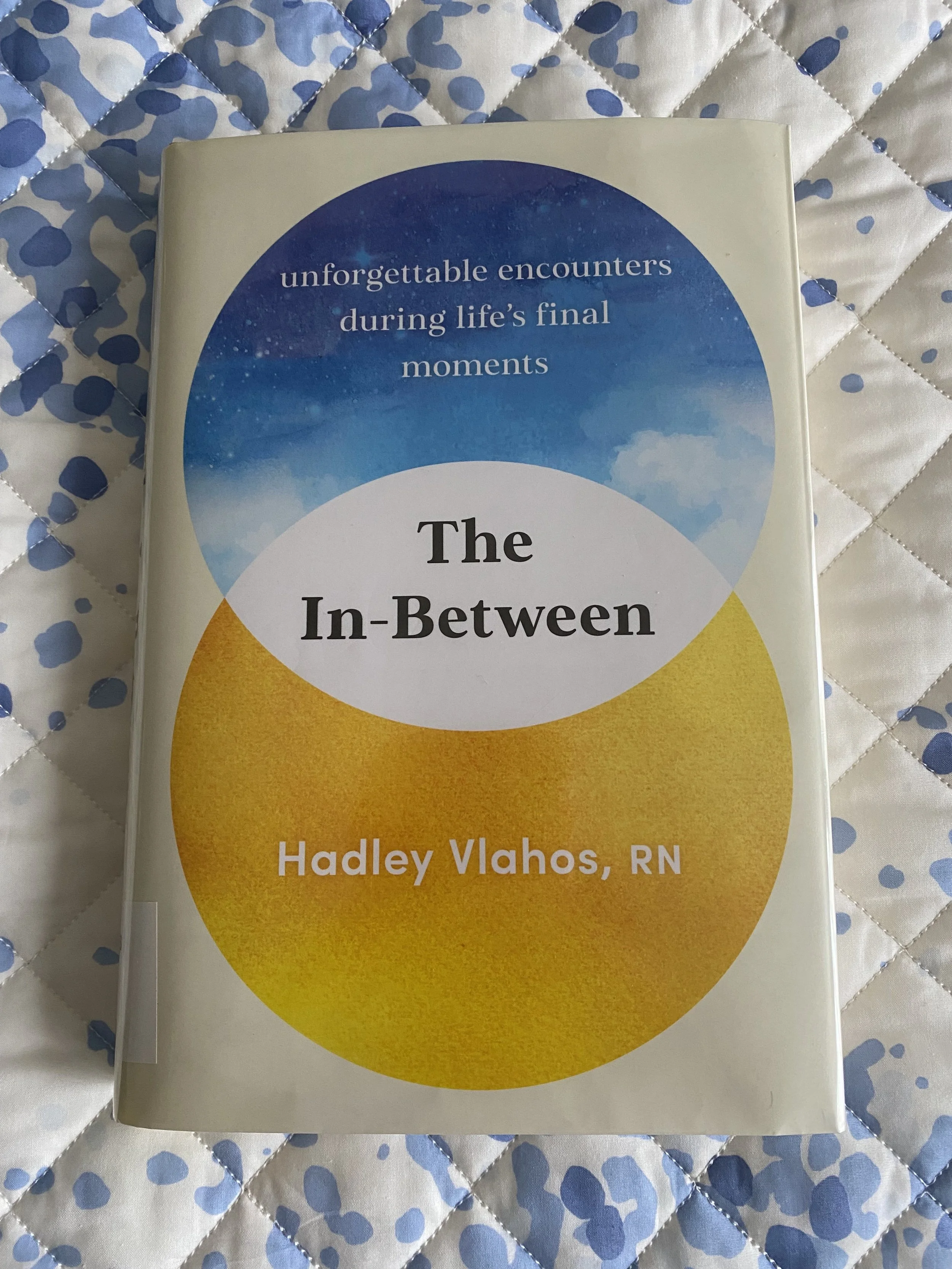
The In-Between by Hadley Vlahos

2/5 stars

How’d I find it? An aspiring hospice nurse, I picked this up at DC Library to learn more about the specialty.

Why not 3 or more stars? The premise of this book captivates: a seasoned hospice nurse shares what she’s learned about death and whatever comes after. There’s not much meat here beyond Vlahos’s observations and anecdotes that read as if they’ve been told many times, which might be meal enough for some. I would have appreciated a deeper dive into the subject matter, supplementing the personal with an academic or historical perspective about the experience of death. What is the medical experience of death? How does practicing medicine affect the beliefs of health care practitioners? How can family members prepare for the end of life? All questions neither asked nor answered.

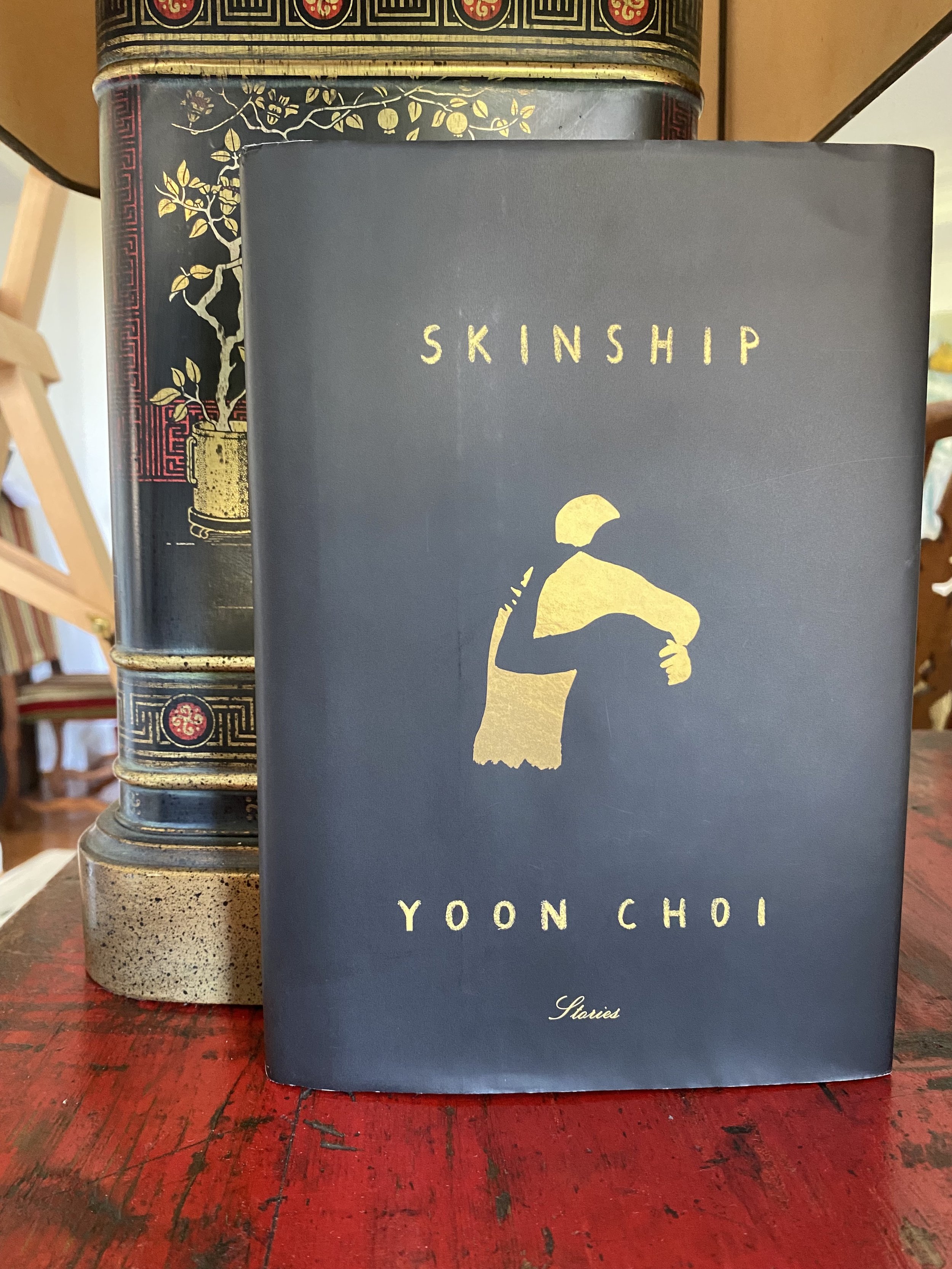
Skinship by Yoon Choi

4/5 stars

What's it about? In this debut collection of short stories, Yoon Choi delves into the joys, disappointments, and secrets within relationships. Each of the eight stories is a tender and intimate portrait of family, the Korean diaspora, and the American experience.

How’d I find it? I obtained this copy from Politics & Prose, a happy purchase with a gift card. Is there any better gift card than a bookstore gift card?

Who will enjoy this book? Literary short story lovers (think The Best American Short Stories) and readers who enjoy Jhumpa Lahiri, Alice Munro, and Karen Tei Yamashita's Sansei and Sensibility

What stood out? Choi's writing is elegantly restrained, clever, and absorbing. You will root for her characters and wish you had more time with them as each story comes to a (sometimes abrupt) close. I found myself enveloped by Skinship's microcosms. "A Map of the Simplified World" and "The Loved Ones" were particular bright points. As a nurse, I chuckled at how perfectly Geneva, the hospice nurse in "The Loved Ones," was written. Of course she has two tuna sandwiches. Of course.

Which line made me feel something? From "Solo Works for Piano" (which reminded me of Kazuo Ishiguro's Nocturnes), when Albert is questioned about his happiness: "She demanded evidence. What evidence? Here is his life. It wakes in the morning and sleeps in the night. It has its routines: the appointments it keeps, the paths it travels. It has meaning, whether or not that meaning can be articulated. It does. It has."

The Rabbit Hutch by Tess Gunty

3/5 stars

What's it about? Tess Gunty's debut novel centers on brilliant teen and aspiring mystic Blandine Watkins and the lives of those who intersect her orbit in Vacca Vale, a sigh of a Midwestern town. While there is much to admire in the character development and depictions of Americana, the plot goes off the rails in that peculiar contemporary way, in which an auspicious start devolves into a violent, cobbled together denouement (think Tommy Orange's There There or The Overstory by Richard Powers). Such endings always make me wonder if the publisher rushed the writer to the finish line.

How’d I find it? I picked up The Rabbit Hutch at the Books-A-Million store located next to a bar I frequent. I tell you, whoever puts their bookstore next to a bar is a genius.

Who will enjoy this book? Fans of Andrew Sean Greer, Deb Olin Unferth, and perhaps Lauren Groff's Matrix, though The Rabbit Hutch is decidedly not a slow burn.

What stood out? Gunty sketches her characters with an oddball collection of tics and thoughts and interests that bring wit and realness to the page. I particularly relished the chapter "Variables," which chronicles Blandine's relationship with her high school music teacher.

Which line made me feel something? "Yes, I wanted your mind and your words and your face and your sadness and your sensitivity and your power and your talent and your age and your imagination and your hair and your music, but ultimately — ultimately — I wanted to fuck your piano." Heartbreaking and hilarious.