3/5 stars
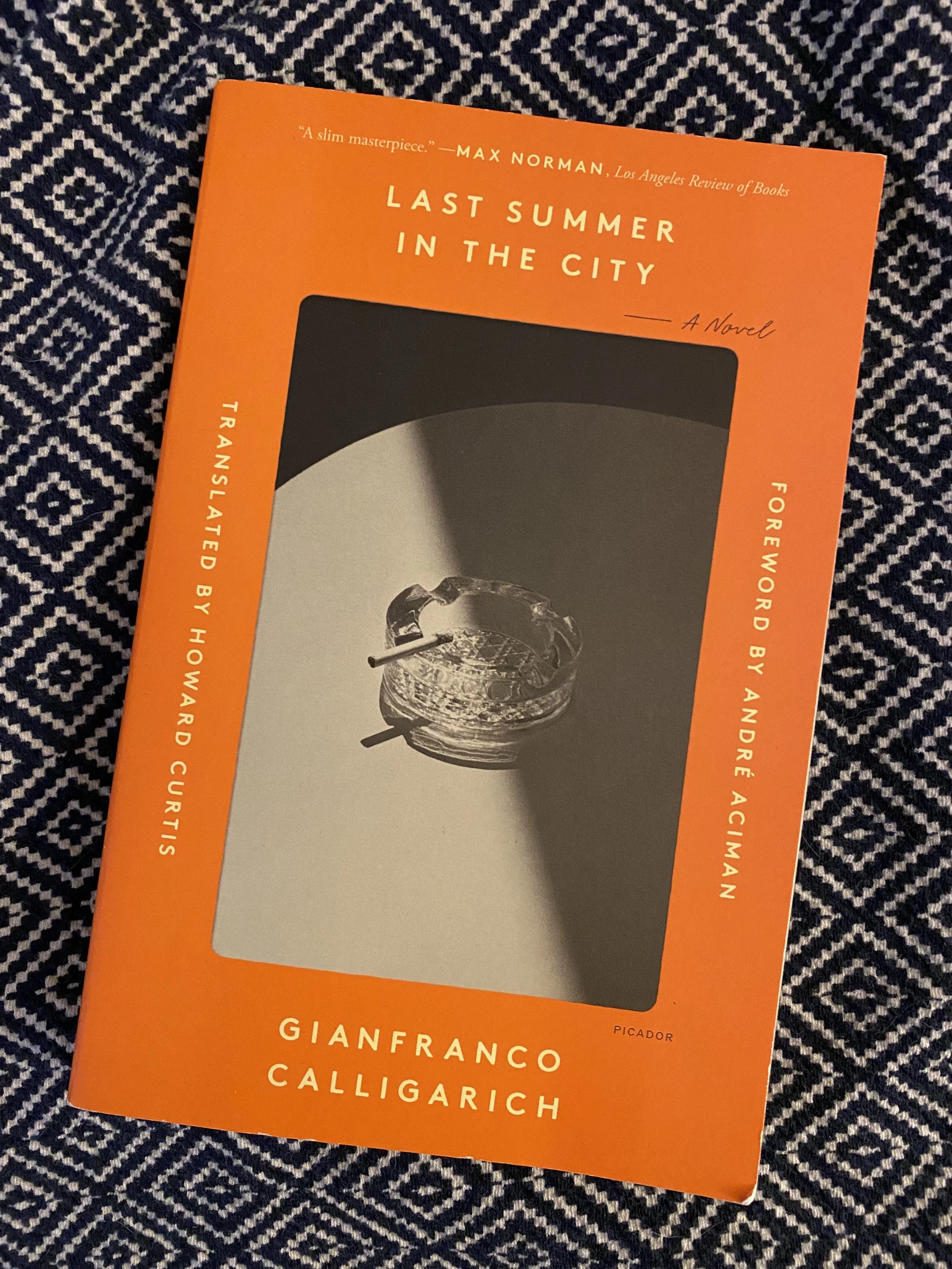
What's it about? Leo Gazarra, perpetually drunk, aimless, remembers at the end of a terrible day that it’s his thirtieth birthday. Thus begins his affair with the unpredictable Arianna. A melancholic novel that makes of Rome an indifferent mistress.
How’d I find it? The staff recommendations shelf at Powell’s has the goods.
Who will enjoy this book? As André Aciman’s introduction to this edition aptly observes, Last Summer in the City is an ideal companion read for Fellini’s La Dolce Vita or Paolo Sorrentino’s The Great Beauty. In terms of tone, think Catcher in the Rye in the style of Bret Easton Ellis.
What stood out? A former resident of Rome, I relished following Leo around the city, meeting folks at the Spanish steps, having far too many drinks at a piazza trattorias, and lazily peering into shop windows. Rome seems to hit people in a particular way, and the characters of this novel all want to escape, burdened by the city’s history and their need for frivolity. Everyone, it would seem, is “at the end of their tether.” Calligarich captures that feeling, and Last Summer in the City marinates in futility, culminating in a last act that ramps up the melodrama. Leo, for his part, knows how to find relief: he takes to the sea.
Which line made me feel something? Leo’s best friend, Graziano, kept me smiling: “We found ourselves in a cloister enclosed by columns carved from boulders. ‘Christ,’ he said. ‘More rocks.’”