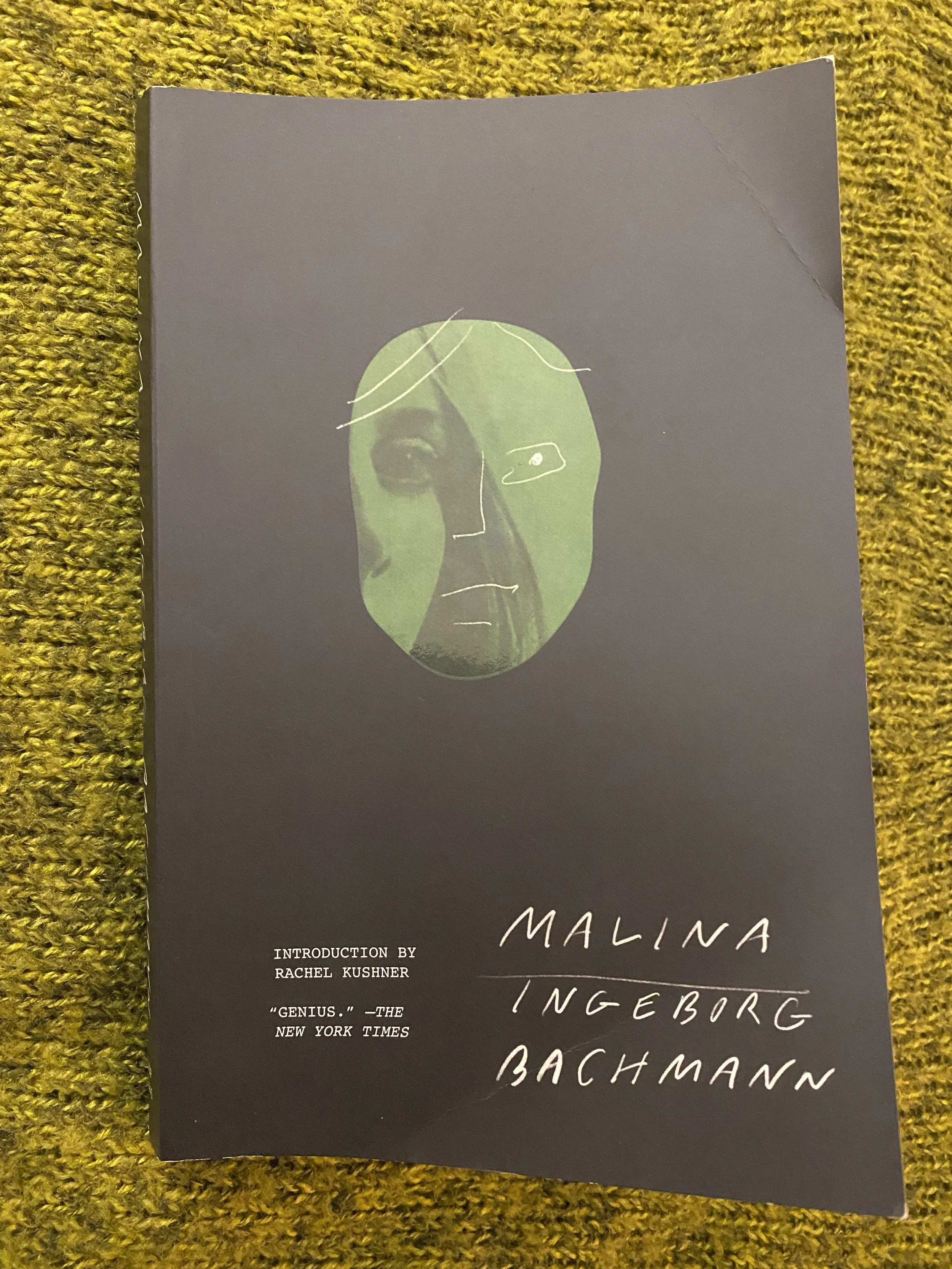
4/5 stars
What's it about? I don’t quite know how to describe Malina: a love story, a rallying cry against fascism and patriarchy, a collage, an excavation of language’s limitations. Or, a writer loves Malina, her live-in partner, and Ivan, a chance encounter that became an affair, and navigates the discontent created by history and violent men. It’s an exhilarating ride.
How’d I find it? This was the most recent book club pick at the excellently curated Lost Avenue Books. Given my answer to the last question, you can imagine the lively discussion.
Who will enjoy this book? If you dug Simone de Beauvoir’s The Woman Destroyed or Sylvia Plath’s The Bell Jar, you’ll want to read this.
What stood out? I admit, I was not won over by the first section of the novel, “Happy with Ivan,” in which the narrator moons over a younger man who lives a few doors down. The section part, “The Third Man,” changed my mind, launching a sequence of delirious dreams about the narrator’s father intercut with conversations with Malina. These pages are brutal, overwhelming, and intense, and Malina morphs into a threat, a malevolent presence. Bachmann evokes deportation, incest, war, rape, and sexism in raw, surreal ways. I couldn’t put it down.
Which line made me feel something? In a section formatted as a local paper’s interview with the writer: “I like to read best on the floor, or in bed, almost everything lying down, no, it has less to do with the books, above all it has to do with the reading, with black on white, with the letters, syllables, lines, the signs, the setting down, this inhuman fixing, this insanity, which flows from people and is frozen into expression.”