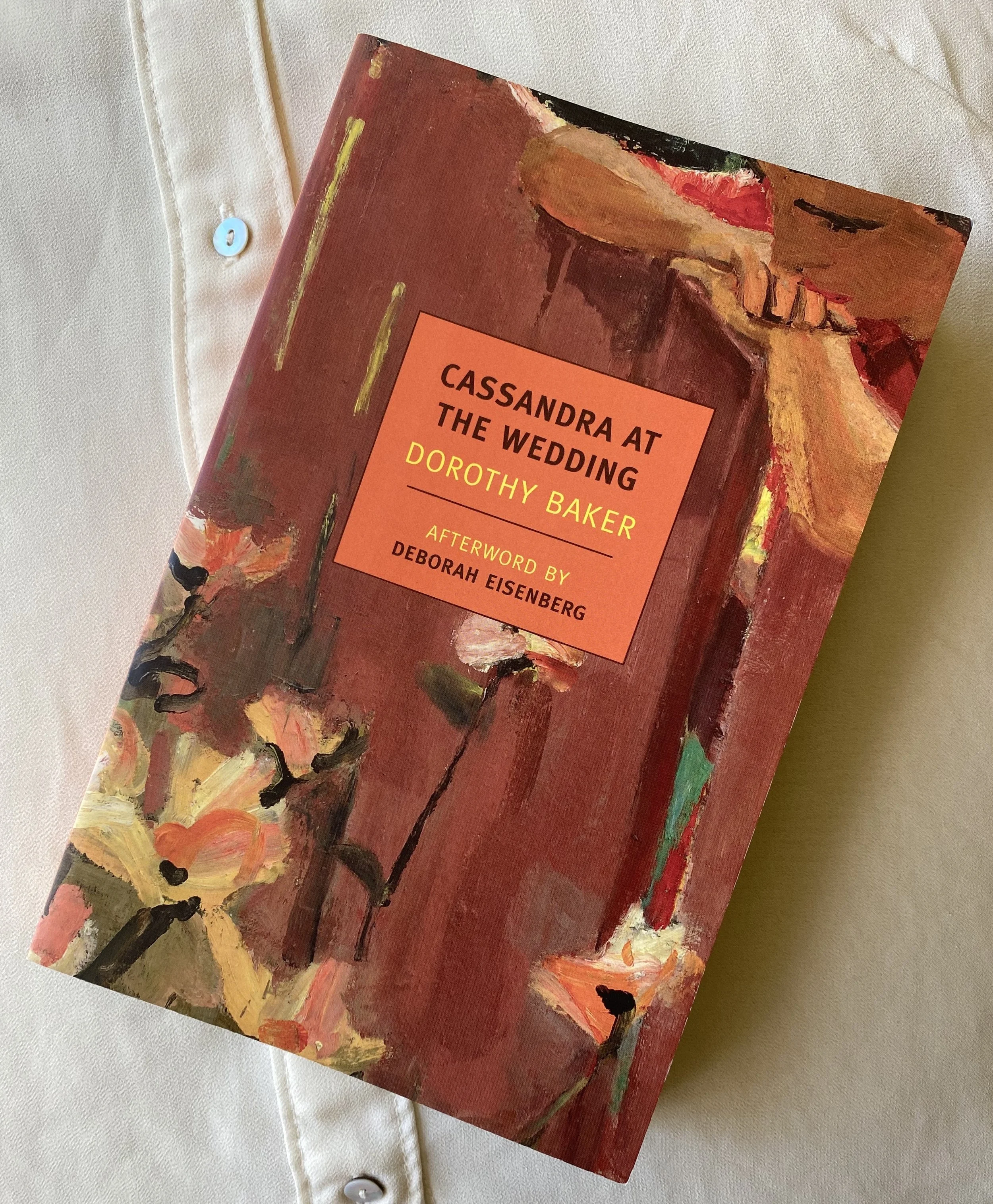
Cassandra at the Wedding by Dorothy Baker

3/5 stars

What's it about? The erratic and brilliant Cassandra Edwards abandons her thesis at Berkeley to sabotage her twin sister’s surprise wedding, but Cassie’s unhappiness soon overpowers the homecoming. A coming-of-age novel about self-acceptance and family.

How’d I find it? I can’t miss the opportunity to stock up when New York Review Books has a sale.

Who will enjoy this book? Baker renders in minute detail the family ranch, the detached father with a glass of brandy glued to his hand, and the prim grandmother who just wants a proper wedding. Her insular domestic world recalls Anne Tyler.

What stood out? The book is broken into three parts, a middle section from sister Judith’s perspective sandwiched between two excursions through Cassie’s glorious mind. Cassie is an annihilating force, unable to admit her own desires and move forward in life. I enjoyed wallowing in her delusion, improved as they are by the character’s wit and curiosity.

Which line made me feel something? The twins drink far too much their first night back together: “Morning’s a side effect. I can’t acknowledge it until it scalds my eyeballs.”
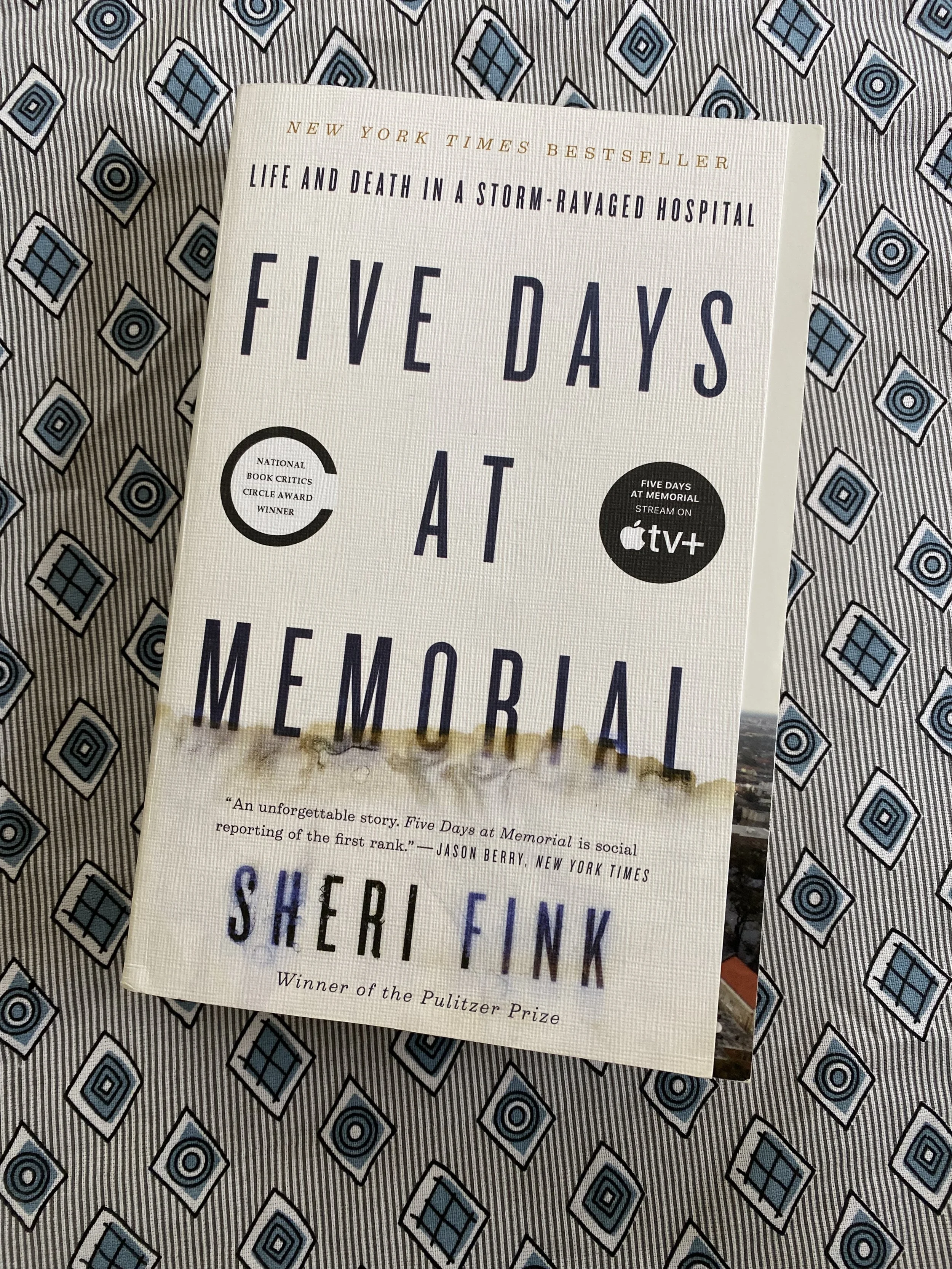
Five Days at Memorial by Sheri Fink

4/5 stars

What's it about? In a thorough and fascinating investigation, Sheri Fink details the individual and systemic failures that led to the unnecessary deaths of patients stranded by Hurricane Katrina at Memorial Medical Center in New Orleans. Fink delivers an unsettling account of ethical questions in healthcare and injustices magnified by our poor preparedness for disasters.

How’d I find it? My book club at work is reading this for its summer pick. I enjoyed much of Five Days at Memorial in its audio format, which was like listening to one long episode of Serial. As a nurse, this book has been hard to shake off.

Who will enjoy this book? The true crime elements recall David Cullen’s Columbine. Try The Yellow House by Sarah M. Broom for a companion read to provide additional context about New Orleans during Katrina.

What stood out? The depth of Fink’s research is evident in the gripping narrative driving Five Days at Memorial, a page-turner the likes of The Executioner’s Song. We get to know the real people behind the devastating decisions they made for Memorial’s patients, and that perspective provides nuance to their actions. Fink takes on the underlying factors that led to the crimes at Memorial, including a history of discrimination, the politics that allowed for unsafe conditions in a hurricane-prone region, and the deficiencies of our healthcare system.

Which line made me feel something? Though written in 2013, Five Days at Memorial raises issues that would haunt the COVID-19 pandemic years later: “The goal, participants said, was to save as many lives as possible while adhering to an ethical framework. This represented a departure from the usual medical standard of care, which focuses on doing everything possible to save each individual life. Setting out guidelines in advance of a crisis was a way to avoid putting exhausted, stressed frontline health professionals in the position of having to come up with criteria for making tough decisions in the midst of a crisis”.

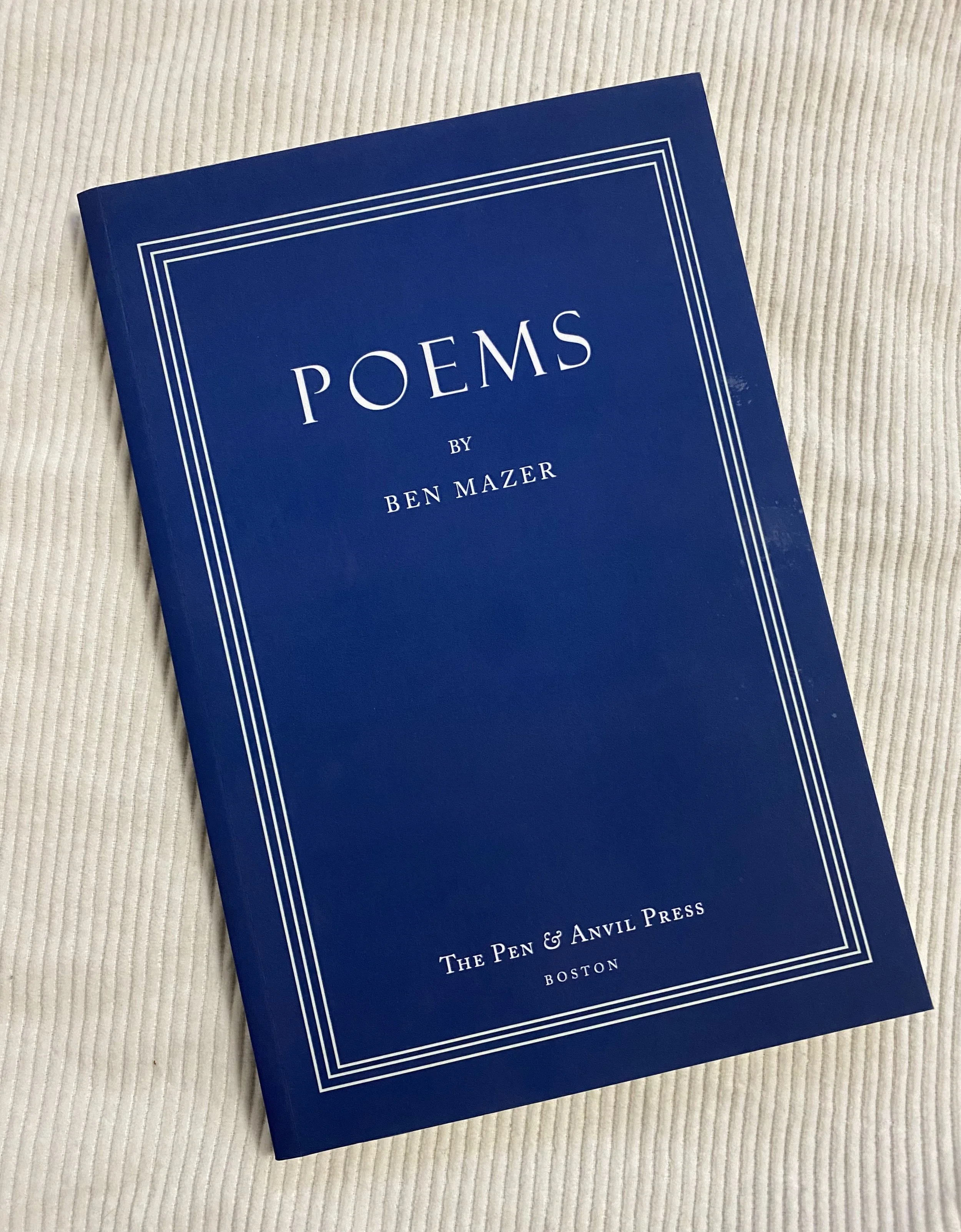
Poems by Ben Mazer

3/5 stars

What's it about? An utterly useless question for a book entitled Poems.

How’d I find it? I once came across a tidbit from Mazer’s poem “The Double” in some article or essay now forgotten and became an instant fan.

Who will enjoy this book? Mazer’s work reminds me of Peter Gizzi’s and Chris Tonelli’s, poets you should explore if you like what you read here.

What stood out? Ben Mazer possesses such a strange, self-assured style that commands the page without apology. Poems contains rhyme, ekphrasis, elegies, and—why not—a ten-page piece in all caps. The language is often so unexpected that one has to reread, try another poem, then come back, and isn’t that what we all want from good poetry? Lines you can sink your teeth into?

Which line made me feel something? The poem “Stieglitz” (a riff on the 1893 photograph Winter — Fifth Avenue) dazzled me, but since it’s too short to spare an excerpt, I leave you with this line from “The Double,” which never fails to knock me on my tush: “The white picket fence is and always has been intense.”

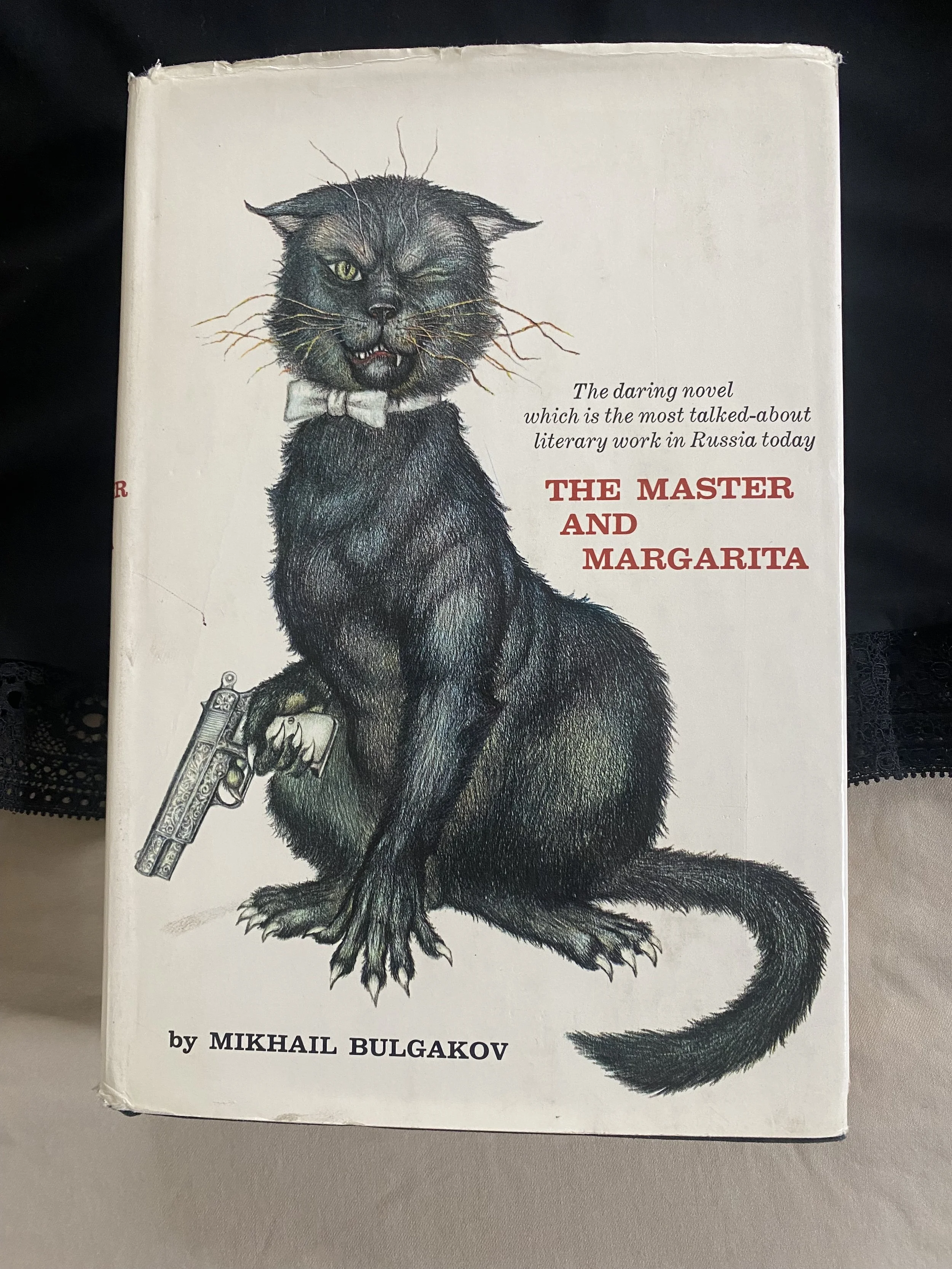
The Master and Margarita by Mikhail Bulgakov, translated by Michael Glenny

5/5 stars

What's it about? The devil and his entourage descend on Moscow and wreak havoc. Margarita becomes entangled in Satan’s doings in order to save her beloved master, who’s devoted his life to writing a book about Pontius Pilate. Bulgakov pokes at the elitists of 1920s Russia in a satire that delivers a very good time.

How’d I find it? A long ago boyfriend once encouraged me to read this book, and I carried this copy around with me for at least ten years before finally cracking the cover. And I’m so glad I did.

Who will enjoy this book? If you appreciate Kundera or Kafka, you’ll want to give this a try.

What stood out? The Master and Margarita is ripe with absurdity and humor; I particularly enjoyed the nude vampire performing chores and Satan’s ball, not least because Margarita leans fully into her new witchiness. The chapters on Pontius Pilate and the execution of Jesus contain spellbinding writing that will linger with the reader and get one on Margarita’s side all the more.

Which line made me feel something? I laughed out loud at this exclamation of Margarita’s, which loses its strangeness in later translations: “Hurray for the cream!” It’s up to you to read that chapter and enjoy it just as much.

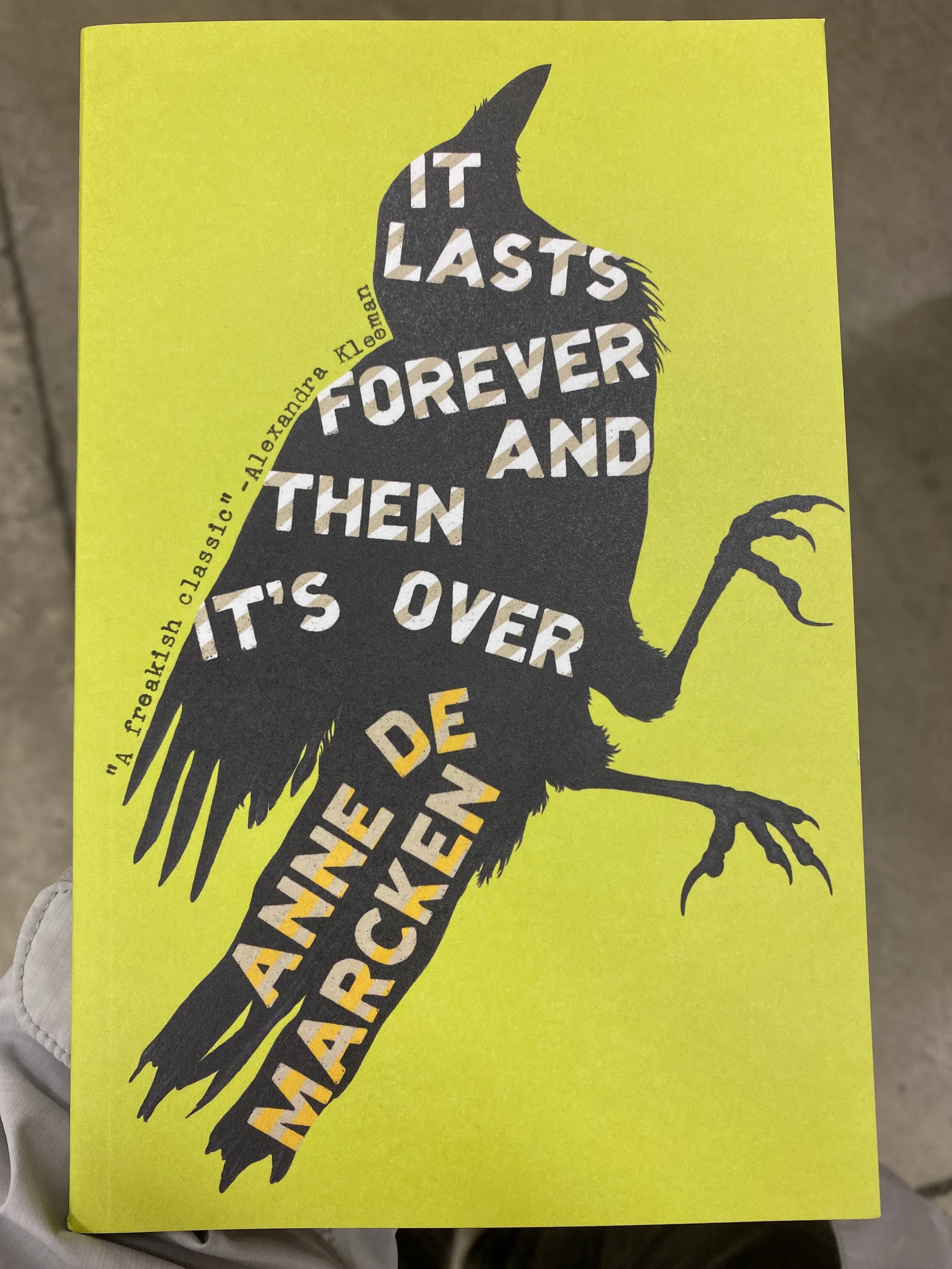
It Lasts Forever and Then It's Over by Anne de Marcken

5/5 stars

What's it about? An undead woman processes her losses, both physical (her body is literally falling apart) and otherwise, in an apocalyptic reality. A beautiful elegy to existence as we know it.

How’d I find it? My favorite bookfluencer turned me on to this read.

Who will enjoy this book? For my fellow lovers of zombie lore, It Lasts Forever and Then It’s Over will scratch the itch.

What stood out? An existential zombie book that clocks in at a mere 120 pages? Count me in. De Marcken’s small masterpiece swings for the big questions—what is existence and why does it matter?—while probing the minor mysteries, like our species’ obsession with naming. You know you’re in for something special when the book starts off with this energy: “I lost my left arm today.”

Which line made me feel something? “Things in rows and ranks are mournful. Trees planted to pulp. Soldiers or their gravestones. Multiplicity and order reveal sameness and variation. The limitations of our individuality. That we can be felled.”

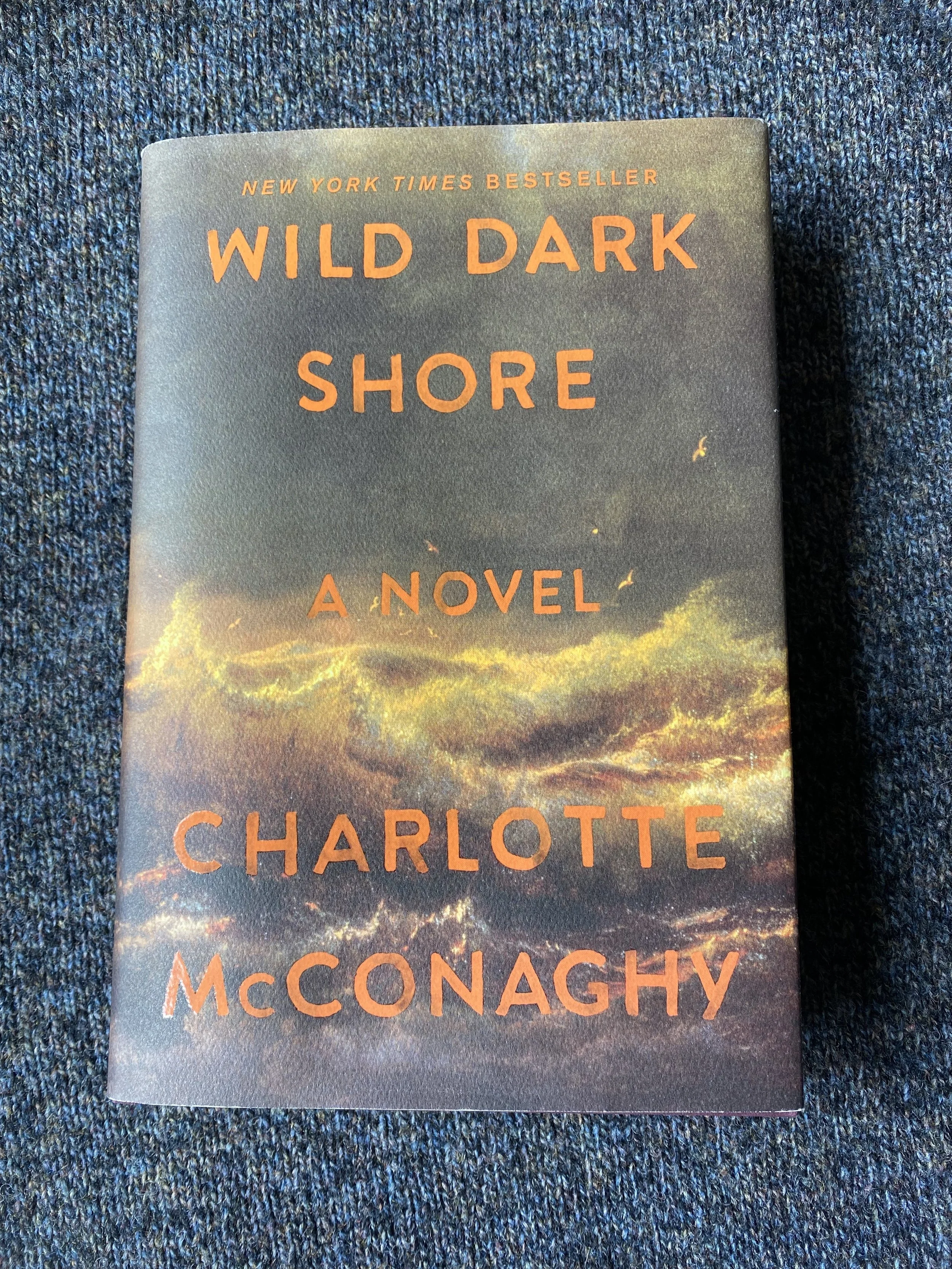
Wild Dark Shore by Charlotte McConaghy

2/5 stars

How’d I find it? The reliable East City Bookshop recommended McConagy’s first novel Migrations, a book I devoured in record time, so I am always excited to see this Australian author’s name on a new cover.

Why not 3 or more stars? How I wanted to love Wild Dark Shore. I find mesmerizing the powerful and complicated women of McConagy’s novels, as well as the sensuality of her writing. The scaffolding simply shows too much in this one, and the unconvincing shifts in voice, chapter breaks, and melodramatic schlock (“it doesn’t matter where I end and she begins”) kept my eyes rolling.

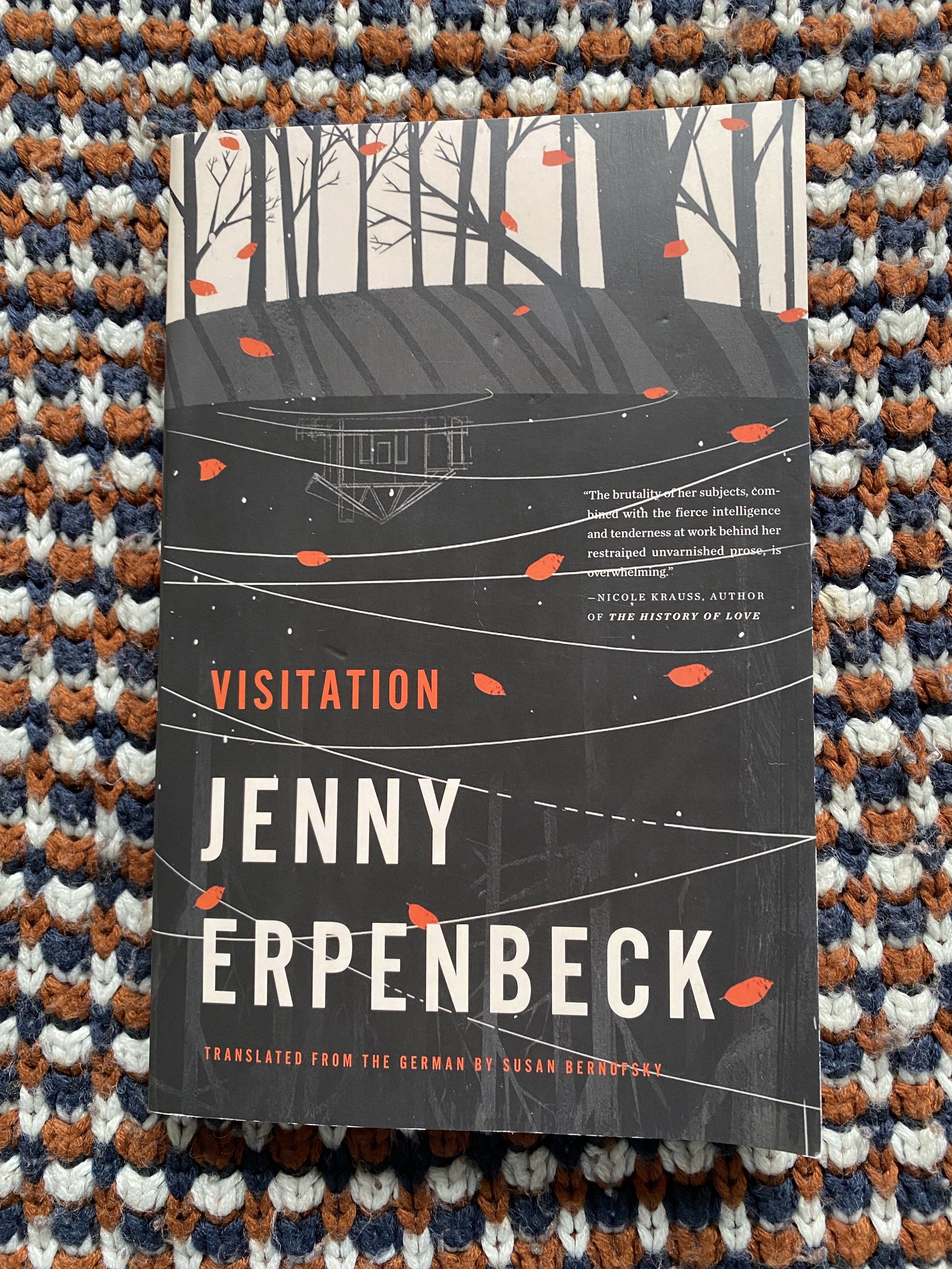
Visitation by Jenny Erpenbeck, translated by Susan Bernofsky

4/5 stars

What's it about? A patch of land beside a lake in the Brandenburg hills outside Berlin hosts human encounters over the course of a century. A book about time, brutality, and the geologic strata of history.

How’d I find it? The book club at Lost Avenue Books picked Visitation for its most recent discussion. Next up: Loop by Brenda Lozano, translated by Annie McDermott.

Who will enjoy this book? Reading Visitation recalls watching Zone of Interest for the first time. If you enjoyed Irène Némirovsky’s Suite Française, pick this one up.

What stood out? The title suits this book perfectly, as the Holocaust haunts the property where Visitation takes place. Erpenbeck embeds the relative mundanity of human concerns within the grander scope of geologic time, an effect that neuters the book’s horror. Chapters in legalese, items in a home described with their prices, dizzying repetitions of family trees—devices that unsettle and send a shudder through the reader. It’s uncomfortable yet exhilarating.

Which line made me feel something? From “The Visitor,” the chapter I most enjoyed: “She wonders whether the sentences go out looking for people to utter them or whether it’s just the opposite and the sentences simply wait for someone to come along and make use of them, and at the same time she wonders if she really doesn’t have anything better to do than wonder about such things…”

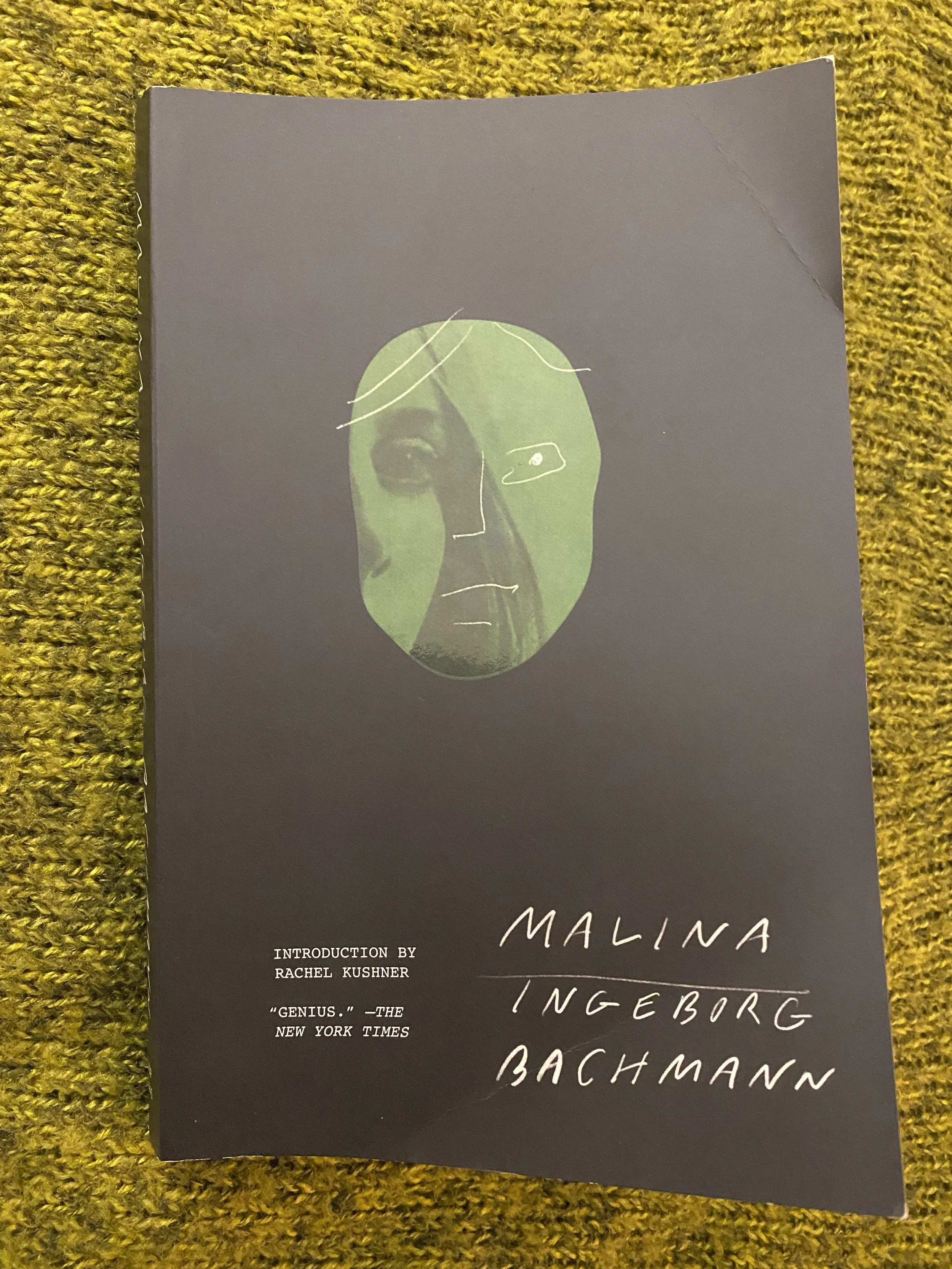
Malina by Ingeborg Bachmann, translated by Philip Boehm

4/5 stars

What's it about? I don’t quite know how to describe Malina: a love story, a rallying cry against fascism and patriarchy, a collage, an excavation of language’s limitations. Or, a writer loves Malina, her live-in partner, and Ivan, a chance encounter that became an affair, and navigates the discontent created by history and violent men. It’s an exhilarating ride.

How’d I find it? This was the most recent book club pick at the excellently curated Lost Avenue Books. Given my answer to the last question, you can imagine the lively discussion.

Who will enjoy this book? If you dug Simone de Beauvoir’s The Woman Destroyed or Sylvia Plath’s The Bell Jar, you’ll want to read this.

What stood out? I admit, I was not won over by the first section of the novel, “Happy with Ivan,” in which the narrator moons over a younger man who lives a few doors down. The section part, “The Third Man,” changed my mind, launching a sequence of delirious dreams about the narrator’s father intercut with conversations with Malina. These pages are brutal, overwhelming, and intense, and Malina morphs into a threat, a malevolent presence. Bachmann evokes deportation, incest, war, rape, and sexism in raw, surreal ways. I couldn’t put it down.

Which line made me feel something? In a section formatted as a local paper’s interview with the writer: “I like to read best on the floor, or in bed, almost everything lying down, no, it has less to do with the books, above all it has to do with the reading, with black on white, with the letters, syllables, lines, the signs, the setting down, this inhuman fixing, this insanity, which flows from people and is frozen into expression.”

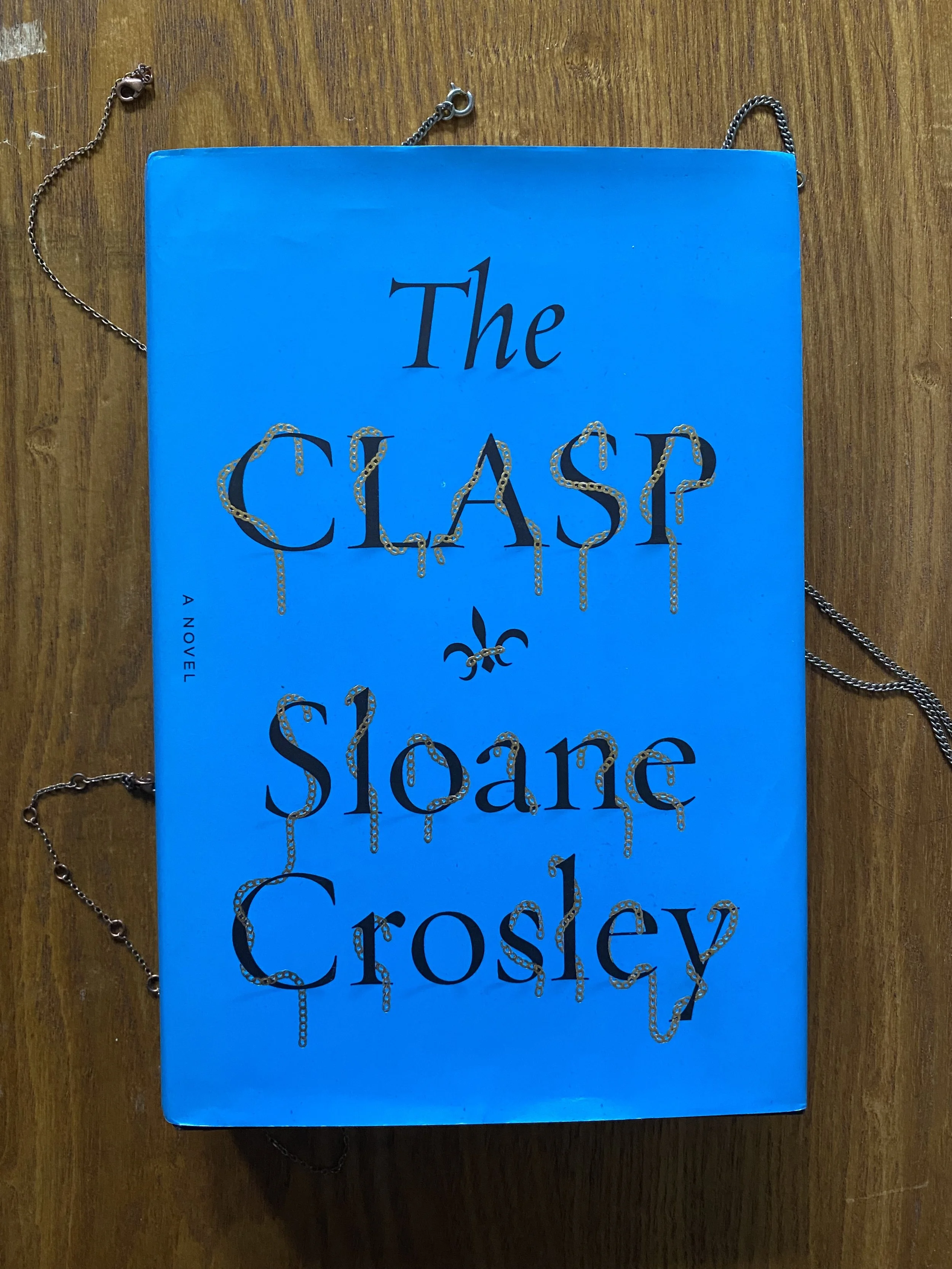
The Clasp by Sloane Crosley

3/5 stars

What's it about? College friends Nate, Kezia, and Victor reunite at a wedding, where down-on-his-luck Victor becomes convinced that he might be able to locate the titular necklace of Guy de Maupassant’s short story. A cleverly written, low stakes read.

How’d I find it? A pal once recommended Crosley’s work to me, and I found this copy at Powell’s on a weekday browsing the fiction shelves.

Who will enjoy this book? Fans of Marcy Dermansky and Lily King might like this one.

What stood out? The Clasp has much going for it: wedding hijinks, a mystery, a toe’s dip into the fashion world, and a trip to France in the third act. Crosley brings to the page wit and an eye for detail that make her sentences shine. See below.

Which line made me feel something? “Parisians were glamorously tattered and superior down to their tile grout. In New York, at least Kezia could go home, knowing that the most elegant person she passed that day was also pulling sweatpants out of her pajama drawer.”

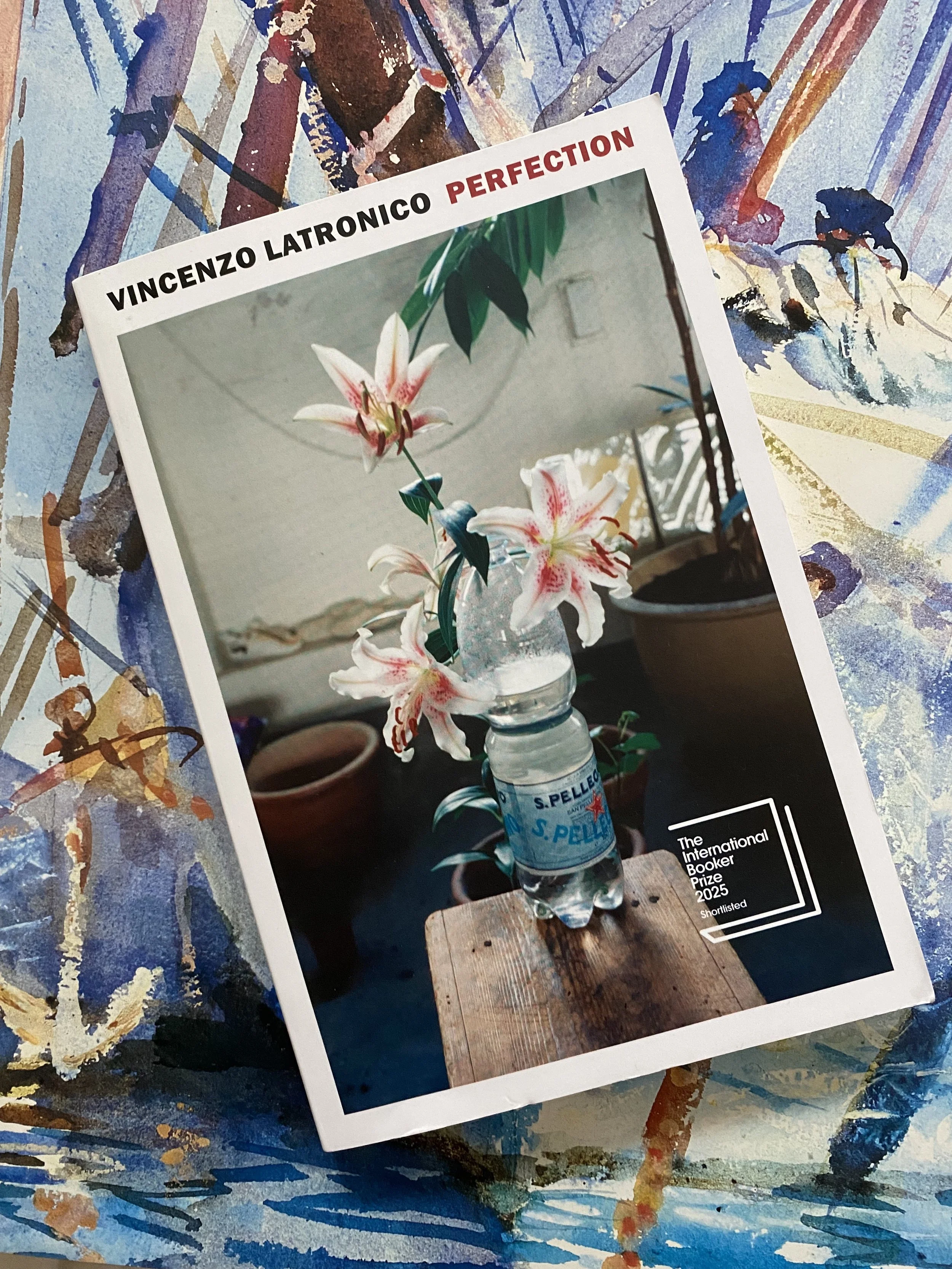
Perfection by Vincenzo Latronico, translated by Sophie Hughes

4/5 stars

What's it about? Anna and Tom are young expats in Berlin, proud of the life they’ve created until they suddenly…aren’t. A searing commentary on modern, work-from-home culture.

How’d I find it? The team at Solid State Books thought I would like this one, and, as always, they were right.

Who will enjoy this book? Millennial freelancers and account execs, this will hit close to home.

What stood out? Latronico has crafted a novel that captures the past ten years like no other I’ve read. The fixation on ambition, codependence in partnership, the meaningless markers of contentment—all utterly contemporary as Anna and Tom sink into their feeds and gentrify their neighborhood. Who needs dialogue when you’ve got grade A malaise?

Which line made me feel something? While the chapter in which Anna and Tom delve into activism certainly feels the most cringeworthy, this description of screen addiction horrified me: “It was like walking through the world’s most hectic street market on cocaine. It was like channel-hopping an entire wall of TV sets. It was like telepathically tuning into the thoughts of a stadium packed with people. But really it wasn’t like anything else, because it was new.”